
Out of 37,181 active open positions, 26,303 are newly created roles while only 10,878 are replacement-based. This means 70.7% of hiring demand in Romania is expansion-driven rather than turnover-driven. This ratio fundamentally changes how the labor market must be analyzed, especially when evaluating the fastest-growing industries in Romania.
According to labor demand classification frameworks used by the European Centre for the Development of Vocational Training Cedefop and Eurostat labor force methodology Eurostat, expansion hiring is a direct proxy for capital investment, productivity scaling, and structural economic growth. Eurostat Job Vacancy Statistics further show that economies with sustained high shares of newly created roles typically align with sectors experiencing capital inflows, FDI-driven scaling, and structural modernization rather than cyclical replacement demand.
In Romania’s case, this expansion is not evenly distributed. It is highly concentrated across a small number of industries that account for the majority of the 26,303 expansion roles. Thus, forming the backbone of the fastest-growing industries in Romania.
To understand the labor market, we must break down where these expansion jobs are actually being created and why.

Logistics and Supply Chain (Highest Expansion Intensity Sector)
The logistics sector represents the most structurally significant contributor to Romania’s expansion hiring. It is one of the defining pillars of the fastest-growing industries in Romania. This dominance is not incidental but a direct outcome of Romania’s evolving position within European supply chains.
Eurostat transport and freight movement indicators show that Central and Eastern Europe has experienced structurally higher growth in warehousing and distribution activity compared to Western Europe over the last cycle of supply chain reconfiguration. Romania sits at the center of this shift.
Over the past several years, Romania has transitioned from a peripheral logistics node into a central distribution corridor connecting Central Europe, Southeastern Europe, and Black Sea trade routes. This transformation is driven by EU single-market integration, cross-border freight expansion, and regional infrastructure upgrades.
European companies have increasingly pursued nearshoring strategies in response to global supply chain volatility. At the same time, e-commerce penetration across Eastern Europe has increased distribution complexity and demand for localized fulfillment infrastructure. These forces combine with ongoing infrastructure investments in road and rail connectivity to create sustained demand for logistics capacity.
Within the 26,303 expansion roles, logistics accounts for a disproportionately large share because each new facility generates a layered employment structure rather than a single job category. A warehouse expansion does not only create warehouse workers. It generates demand for logistics planners, supply chain analysts, transport coordinators, procurement specialists, and operations supervisors.
Romania’s geographic position further strengthens this dynamic. The country sits at a strategic intersection of EU internal trade flows and external regional supply corridors, making logistics one of the most structurally sensitive and fastest expanding components of the fastest growing industries in Romania.
Technology and Digital Operations (Second Largest Expansion Driver)
The second largest contributor to Romania’s 26,303 expansion jobs is the technology sector. Which also represents one of the most structurally significant components of the fastest-growing industries in Romania.
Eurostat ICT employment data consistently places Romania among the more rapidly expanding digital labor markets in the EU relative to its total employment base, particularly in software engineering, IT services, and systems development.
The most important characteristic of technology hiring in Romania is its dual structure. On one hand, Romania functions as a major export hub for IT services, supplying engineering talent to Western Europe and North America. On the other hand, domestic enterprises are undergoing accelerated digital transformation, increasing internal demand for advanced technical capabilities.
This dual structure means technology hiring is simultaneously export-driven and domestic-modernization-driven. External demand is tied to global labor integration, while internal demand reflects enterprise digitization, automation, and cloud migration cycles.
The roles being created reflect this shift clearly. Cloud infrastructure engineers, cybersecurity specialists, data engineers, backend developers, and systems architects are being added as net-new capabilities rather than replacements. These roles are typically created ahead of operational demand because they support capacity building and scalability.
This positions technology as a structural growth engine within the Fastest Growing Industries in Romania, rather than a supporting sector.
Manufacturing and Industrial Production (Nearshoring-Driven Expansion Layer)
Manufacturing remains a major pillar of the Romanian expansion labor market and a core driver of the fastest-growing industries in Romania. However, its structure has shifted significantly due to European industrial reconfiguration.
Across the European Union, production networks have increasingly relocated toward Central and Eastern Europe as firms optimize for geopolitical resilience, supply chain stability, and cost efficiency. Romania benefits strongly from this shift due to its EU integration, industrial base, and proximity to Western European markets.
Eurostat industrial production and FDI-linked manufacturing indicators show sustained capital inflows into Eastern European manufacturing corridors, particularly in automotive components, electronics, and precision engineering.
This expansion is not simply workforce replacement. It involves the creation of entirely new production ecosystems. Each manufacturing investment generates layered employment demand including production operators, industrial engineers, robotics technicians, maintenance specialists, and quality assurance teams.
A single facility often produces cascading employment effects across supplier networks, logistics chains, and technical service providers. This is why manufacturing contributes disproportionately to expansion hiring volumes despite being capital intensive.
Unlike logistics or technology, manufacturing expansion is highly dependent on capital investment cycles and infrastructure readiness.
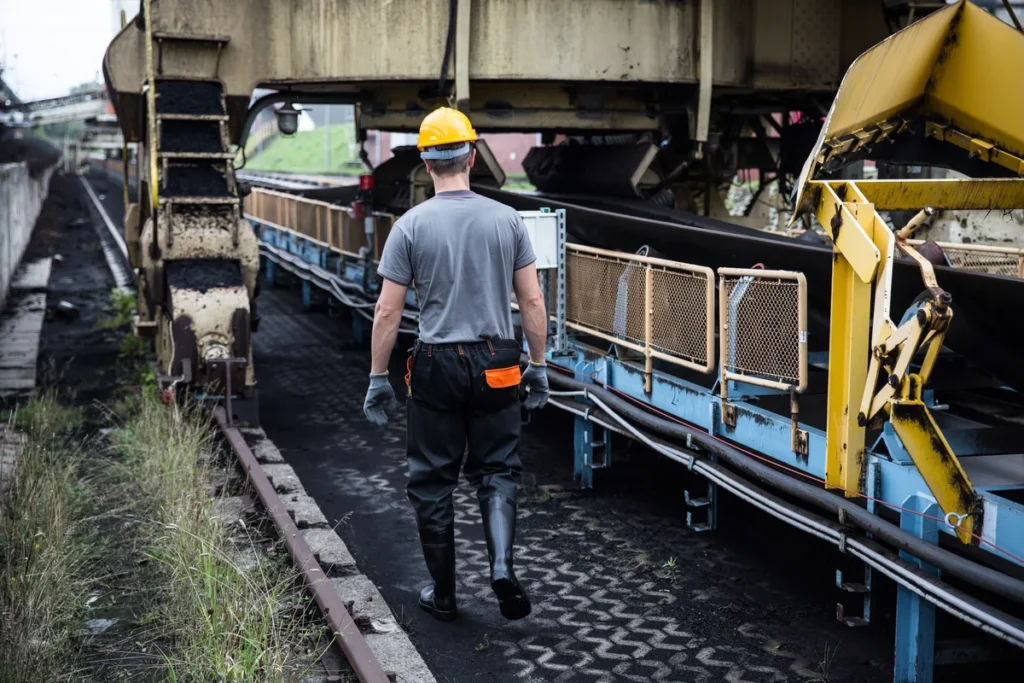
Construction and Infrastructure (Asset Creation Employment Layer)
The construction sector represents a distinct expansion mechanism within Romania’s labor market. It remains a foundational component of the fastest-growing industries in Romania.
Romania is currently undergoing sustained infrastructure development across transport networks, energy systems, industrial parks, and urban expansion zones. These developments are strongly supported by EU cohesion policy funding and multi-year public investment frameworks designed to reduce regional disparities.
Eurostat construction output indicators across Eastern Europe show that infrastructure investment cycles remain one of the strongest predictors of employment expansion in engineering, project management, and materials supply chains.
The employment impact of construction is not confined to physical labor. Each infrastructure project creates multi-layered demand including civil engineers, architects, procurement managers, logistics coordinators, and regulatory compliance specialists.
Construction is cyclical by nature, but Romania’s current investment environment is stabilized by long-term EU funding mechanisms and national infrastructure modernization programs. This creates a sustained pipeline of employment demand, reinforcing its importance in the fastest-growing industries in Romania.
Also read: The Real Reason Romanian Graduates Struggle to Find Jobs in 2026
Shared Services and Enterprise Operations (Corporate Scaling Layer)
Shared services represent one of the most structurally consistent but often under-recognized components of Romania’s expansion labor market and contribute significantly to the fastest-growing industries in Romania.
These roles include HR operations, financial administration, procurement coordination, customer support functions, and enterprise management systems.
Their expansion is directly linked to multinational corporate scaling within Romania. As international firms expand operations, they replicate internal administrative systems to support regional and cross-border operations.
This creates proportional scaling effects. As operational capacity increases, support functions must expand in parallel to maintain organizational stability.
Unlike manufacturing or logistics, shared services expansion does not require heavy physical capital investment. Instead, it relies on organizational scaling efficiency and workforce integration within corporate structures. This makes it one of the most consistently expanding employment categories in Romania, particularly in urban business hubs where multinational clustering is strongest.
Final Thoughts
The structure of Romania’s labor market clearly demonstrates a shift toward expansion-driven employment creation rather than replacement-driven hiring. With more than 70% of job openings classified as newly created roles, Romania is actively building new economic capacity across multiple structural sectors.
When analyzed together, the data confirms that the fastest-growing industries in Romania are not isolated trends but interconnected systems of growth. Logistics is expanding as Romania strengthens its role in European supply chains. Technology is scaling through both global service exports and domestic digital transformation. Manufacturing is accelerating through nearshoring and industrial relocation. Construction is growing through sustained infrastructure investment, and shared services are expanding alongside multinational corporate integration.
Taken together, these forces define the fastest-growing industries in Romania as structurally reinforced sectors shaped by EU integration, foreign direct investment flows, and long-term productivity upgrading. The result is a labor market increasingly defined by creation rather than replacement, positioning Romania as one of the most dynamically evolving employment ecosystems in Central and Eastern Europe.