
When people think about getting a job, especially in Europe, there is still a strong assumption that a university degree is the default entry requirement for most roles. For many years, education systems, career guidance, and even public discourse have reinforced the idea that higher education is the primary gateway into stable employment and better salaries.
However, when you actually look at how employers structure job requirements in Romania, the reality looks very different.
A large-scale analysis of job listings shows that university degree requirements represent only a small portion of total hiring demand. In fact, most jobs are not structured around academic qualifications at all. Instead, they are built around skills, experience, and operational capability.
This shifts the conversation away from “what degree do you need” and toward a much more practical question, which is “what can you actually do on the job.”
To understand this properly, we need to look at the actual distribution of education requirements across job postings.
Higher education requirements account for 1,221 listings. A master’s degree requirement accounts for only 59 listings. Vocational education appears in 1,807 listings. General school education appears in 2,080 listings.
This distribution is critical because it immediately shows that university degree requirements are not the dominant hiring condition. Instead, they represent a smaller, more specialized portion of total hiring demand.
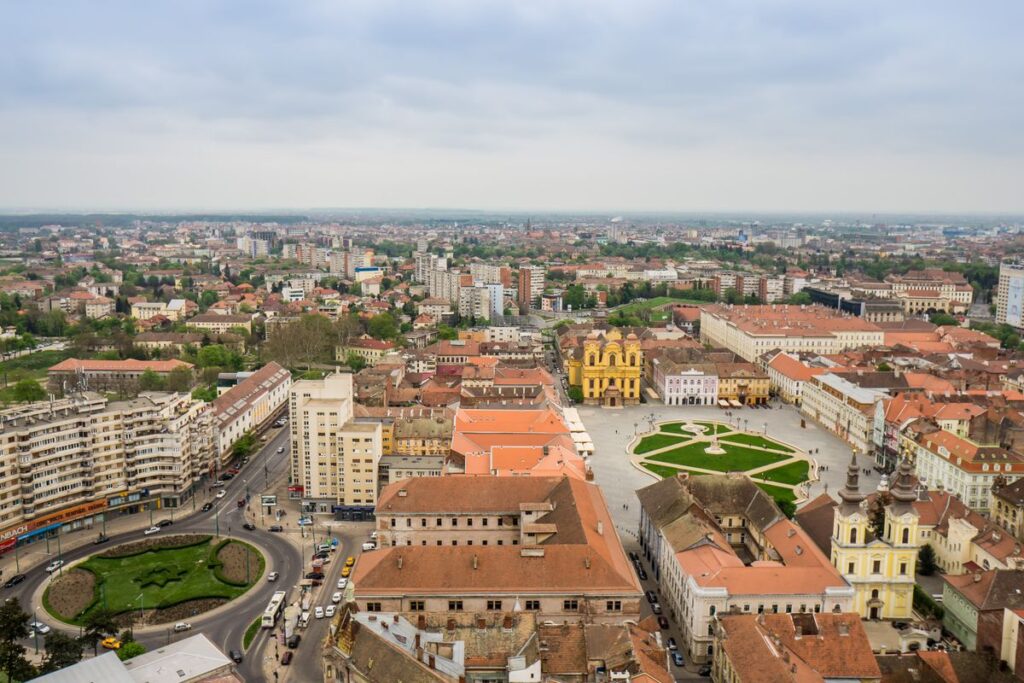
Higher Education Jobs Romania and Why They Are a Minority Segment
Higher education jobs in Romania exist primarily in structured professional sectors such as IT, engineering, healthcare, finance, legal services, and public administration. These roles typically require theoretical knowledge, formal training, or regulated qualifications that justify degree-level education.
However, these sectors do not represent the majority of job listings in the market.
The reason is structural rather than educational. Romania’s labor market contains a large proportion of operational industries where hiring demand is driven by execution-based work rather than academic specialization.
These include logistics, manufacturing, retail, warehousing, transportation, construction, and hospitality. These sectors collectively generate high volumes of job postings and rely heavily on workforce scalability rather than credential filtering.
As a result, higher education becomes a selective requirement rather than a universal baseline.
This explains why only 1,221 listings explicitly require university education within the dataset.
Master’s Degree Jobs Romania and Why Only 59 Listings Exist
The most striking signal in the dataset is the extremely low number of Master’s degree requirements.
Only 59 job listings explicitly require a Master’s degree.
This figure is important because it highlights the functional role of postgraduate education in the labor market. Rather than being a common requirement, Master’s degrees are used as highly selective filters in niche roles.
These roles are typically found in academic environments, research positions, senior legal functions, highly specialized analytical roles, or regulated professional contexts where advanced knowledge is essential.
However, the scale of demand is extremely limited compared to the broader labor market.
This means that Master’s degrees function as exception-based credentials rather than structural hiring requirements.
They are not embedded in general workforce demand patterns.
Also read: Top 10 Fintech Recruitment Agencies in Romania
Vocational Education Romania and the Real Foundation of Hiring Demand
The largest portion of job listings falls under vocational education requirements, accounting for 1,807 listings in the dataset.
This category represents a critical but often under-discussed segment of the labor market.
Vocational education is closely aligned with operational industries where practical skills are more important than academic qualifications. These include machine operation, logistics coordination, technical maintenance, production roles, construction work, and service-based operational jobs.
These roles form the backbone of day-to-day economic activity.
Without vocational workers, key systems such as supply chains, manufacturing lines, retail distribution networks, and infrastructure maintenance would not function effectively.
This explains why vocational education appears more frequently in job listings than higher education.
It is not a lower-tier requirement. It is a volume-driven requirement.
General Education Jobs Romania and Entry-Level Labor Market Structure
General education requirements, which account for 2,080 listings in the dataset, represent the largest single category of job postings.
This category typically includes roles where formal qualifications are minimal or where training is provided directly by employers after hiring.
These jobs often prioritize reliability, adaptability, and willingness to learn over formal education credentials.
This reflects a labor market structure where accessibility is important for workforce scalability.
In many sectors, employers prioritize onboarding speed and operational flexibility over academic background, particularly in high-turnover or high-volume hiring environments.
This is why general education appears as the largest category in the dataset.
Skills-Based Hiring Romania and Why Degrees Are Not the Primary Filter
The overall structure of the dataset clearly shows that hiring in Romania is not primarily degree-driven.
Instead, it reflects a skills-based hiring model where employers prioritize practical capability over formal education.
Skills-based hiring emphasizes what a candidate can do in real working conditions rather than what qualifications they hold on paper.
This includes communication ability, technical proficiency, adaptability, and operational reliability.
In sectors with high hiring volume, these traits are more valuable than academic credentials because they directly impact productivity and performance.
As a result, education becomes one input in hiring decisions rather than the dominant filtering mechanism.
What This Means for Job Seekers in Romania
For job seekers, this data fundamentally changes how career planning should be understood.
The assumption that university education is required for most jobs does not align with actual hiring demand.
Instead, the majority of available roles fall outside higher education requirements, meaning that opportunities exist across multiple education levels.
This creates a more flexible labor market where vocational training, practical experience, and on-the-job learning can provide viable entry points into employment.
Career progression is often driven more by performance and experience than by formal academic credentials.
This allows for upward mobility even without university education in many sectors.
University Degree Jobs In Romania and the Real Labor Market Structure
The Romanian job market is not structured around university degree requirements as a dominant hiring filter.
Instead, it is structured around a combination of vocational education, general education accessibility, and selective higher education requirements in specialized sectors.
Higher education accounts for only 1,221 listings, while Master’s degrees appear in just 59 listings, making them niche requirements rather than general standards.
The majority of hiring demand is driven by operational industries where skills and execution matter more than formal academic qualifications.
This creates a labor market that is fundamentally skills-based rather than degree-based.
For job seekers and employers alike, understanding this structure is essential for making informed decisions about hiring, career development, and workforce planning in 2026.
Also read: Construction Labour Shortage in Romania 2026: Why 3,000+ Vacancies Stay Open