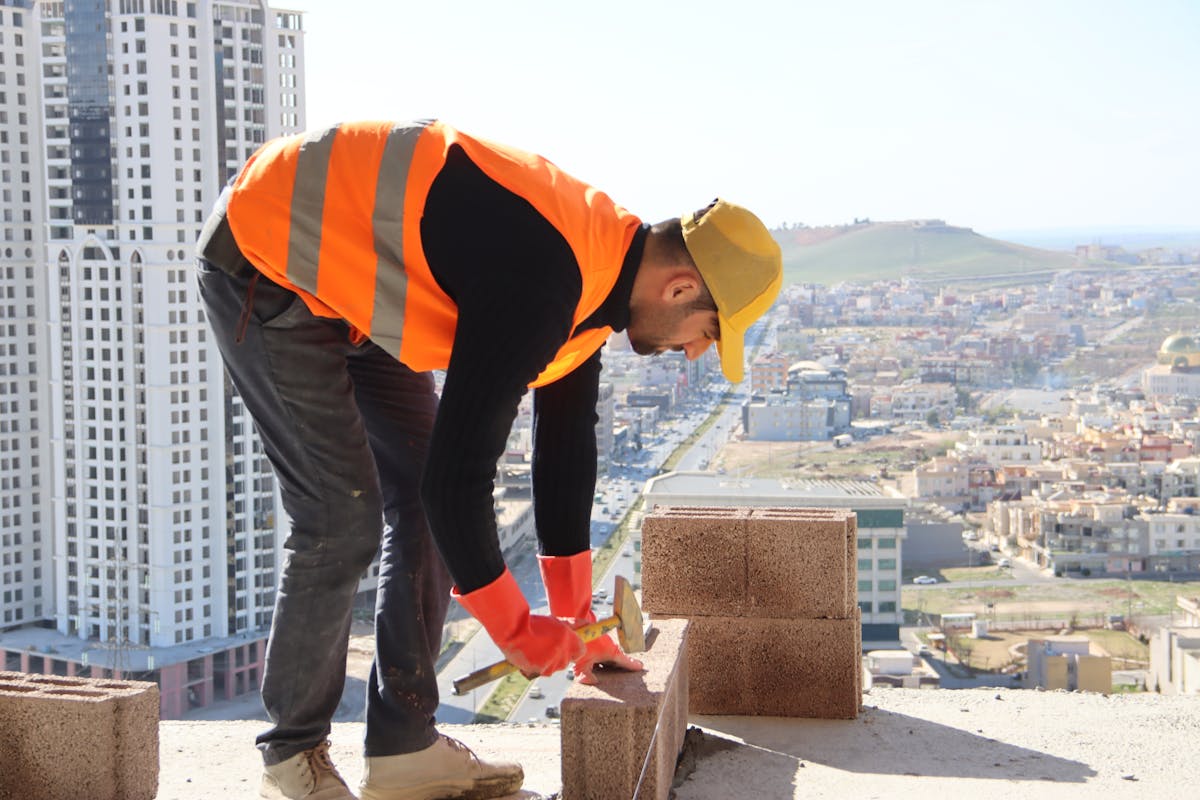
Construction jobs in Romania in 2026 are no longer just about manual labour or unstable seasonal work.
They have become one of the most financially competitive entry-level labour markets in the country.
At a time when many white-collar entry roles are saturated, construction is offering structured pay ranges, stable demand, and consistent hiring pressure.
This shift is driven by infrastructure investment, labour shortages, and EU-funded development programmes that are reshaping the entire sector.
The Salary Structure in Romanian Construction in 2026
Construction salaries in Romania vary significantly depending on role type and experience level.
At the entry level, unskilled labourers earn between 2,800 and 3,800 lei gross per month.
These roles typically involve demolition, material handling, and basic site support tasks.
Semi-skilled workers such as tilers, plasterers, finishers, and scaffolders earn between 4,000 and 6,000 lei gross per month.
Skilled tradespeople such as electricians, plumbers, welders, and technical installers earn between 5,000 and 9,000 lei gross per month.
This creates a clear progression structure inside the industry.
And unlike many office roles, this progression is directly tied to experience and certification rather than purely academic credentials.
Also read: Construction Jobs in Romania Are Booming in May 2026: What Is Driving It and What It Pays
Why Employer Type Changes Everything
One of the most important insights in Romanian construction hiring is that salary is not only determined by role type.
It is determined by employer category.
Companies working on PNRR-funded projects and multinational contractors consistently pay higher wages than smaller domestic firms.
This is because large infrastructure projects have larger budgets, stricter deadlines, and higher compliance requirements.
As a result, they compete aggressively for labour.
This creates salary inflation in certain segments of the market, especially for skilled workers.
Workers on EU-funded projects often earn significantly more than those in smaller private construction sites performing similar tasks.
Also read: 10 High-Demand Jobs in Romania Right Now and Why Employers Can’t Fill Them
What Is Driving the Construction Boom
Romania’s construction growth is primarily driven by PNRR investment.
This includes highways, hospitals, schools, energy efficiency upgrades, and public infrastructure projects across the country.
The most visible projects are motorway expansions such as A7 and A8, which are generating sustained labour demand across multiple regions.
At the same time, residential and commercial renovation projects are adding additional pressure to the labour market.
This combination creates continuous demand for both skilled and semi-skilled workers.
Why Labour Shortages Are Pushing Salaries Up
Romania’s construction sector is facing a structural labour shortage.
Years of migration to Western Europe have reduced the available workforce significantly.
Countries like Germany, Austria, and the UK continue to attract Romanian workers with higher wages and more stable long-term contracts.
This has left Romanian employers competing for a smaller domestic workforce.
The result is upward pressure on wages, especially in skilled trades.
Final Thoughts
Construction jobs in Romania in 2026 are not just plentiful.
They are financially competitive.
With salaries ranging from 2,800 to 9,000 lei gross depending on skill level, construction is now one of the strongest entry-to-mid-level earning sectors in the country.
And with ongoing infrastructure investment, demand is unlikely to slow down.